-
Who this is for, and how long it takes
-
The 7-step checklist
-
Step 1 — Lock the part identity before you email anyone
-
Step 2 — Ask for the drawing, not a photo of the box
-
Step 3 — Find out whether you're talking to a factory or a forwarding desk
-
Step 4 — Order samples like you mean it
-
Step 5 — Structure the quote so nothing "appears" later
-
Step 6 — Inspect before shipment, especially on rush orders
-
Step 7 — Get the paperwork and the labeling right
-
Step 1 — Lock the part identity before you email anyone
-
Common mistakes, in order of how often I see them
I coordinate rush orders for an aftermarket parts exporter — roughly 400 of them over six years, most placed by importers and regional distributors who are either filling a container gap or covering a customer's breakdown. Most of what I know about sourcing front wheel hub assemblies came from getting it wrong first, and then writing the mistake into a checklist so it wouldn't happen twice.
One clarification before anything else, because it matters legally: MOOG is a registered trademark of Moog Inc. / DRiV. This guide is about sourcing aftermarket replacement front wheel hub assemblies built to fit the applications MOOG covers — not genuine MOOG parts, and not from an authorized MOOG distributor. If genuine is what you need, buy from the authorized channel. If you need an MOOG-fitment replacement line at import volume, keep reading.
Who this is for, and how long it takes
This checklist is for importers, regional wholesalers, repair chain buyers and fleet procurement managers placing their first or second order with a Chinese front wheel hub assembly supplier. Not for someone reordering a SKU they've bought eight times — you already have your own version of this list.
Realistic timeline: 4 to 8 weeks from a standing start (part identification through first shipment), or 5 to 10 days if you already know the exact part identity and just need stock moved. Seven steps. If you can't complete step 1, the other six don't matter.
The 7-step checklist
Step 1 — Lock the part identity before you email anyone
Nine out of ten bad quotes trace back to a vague RFQ. "Front wheel hub assembly for a 2016 Corolla" isn't a spec, it's a conversation. Collect these eight fields first:
- Application: make, model, year, engine, drivetrain (FWD/AWD — this changes the rear interface, not the front flange, but it changes what your customer thinks they ordered).
- Side: front left vs front passenger side. On a lot of platforms the ABS sensor lead length and routing differ, and the two aren't interchangeable.
- OE and interchange numbers, plus the MOOG part number you're cross-referencing — as a reference point, never as an order code.
- Bearing type: ball or tapered roller.
- ABS configuration: integrated speed sensor vs magnetic encoder ring. If the supplier asks for pole count, give it to them.
- Flange geometry: bolt circle diameter, hole count, thread size, wheel pilot diameter.
- Spline count at the CV interface.
- Whether the steering knuckle is included or it's a bare hub and bearing assembly.
Checkpoint: if you can't fill six of those eight, don't send the RFQ yet. You'll get a quote back within a day that looks professional and is wrong.
The field people skip is the ABS encoder. Two assemblies can look identical on a bench and have different pole counts and sensor air gaps. On the vehicle that's a speed sensor code, a dashboard light, and a comeback your customer owns — not the supplier.
Step 2 — Ask for the drawing, not a photo of the box
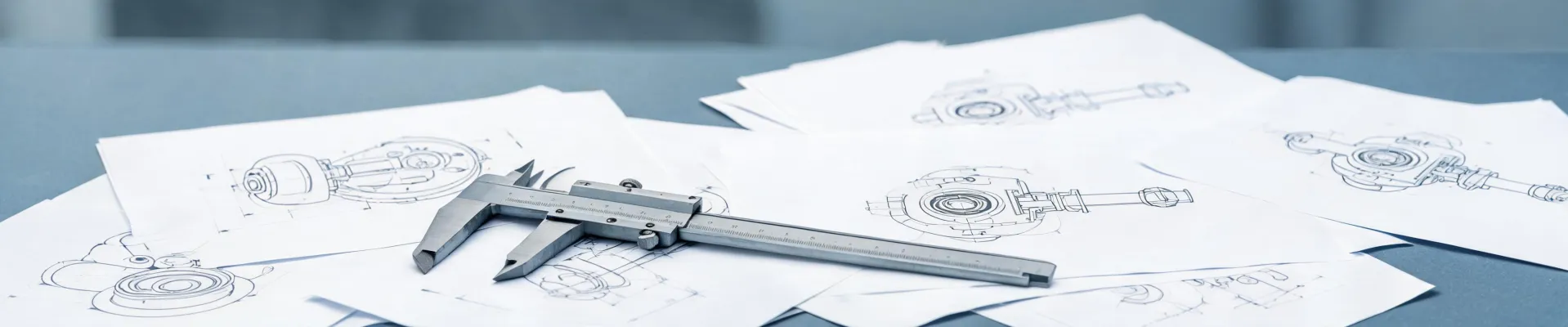
This is where "front wheel hub assembly diagram sourcing" searches usually go off track. A diagram doesn't replace an RFQ; it's the starting point for one. A photo of a carton with a part number printed on it tells you nothing.
A usable wheel hub assembly drawing or spec sheet should give you: a cross-section view, overall height and flange diameter with tolerances, bearing internal clearance, seal design and lip material, hub material and hardness range, ABS ring type and pole count, mounting bolt grade, and the surface finish on the wheel pilot. If the supplier sends a diagram without tolerances, ask again. If they send one with tolerances they can't hold, walk away politely.
I'll be honest about how I learned this. In 2022 we shipped 200 units to a distributor in Texas off a photo and a verbal "it's the same as the last one." Right shape, right spline, wrong encoder. That was about $4,100 in wasted air freight and a credit note, and the customer still brings it up. Now nothing moves without a signed-off drawing in the file.
Step 3 — Find out whether you're talking to a factory or a forwarding desk
China has plenty of good hub assembly manufacturers and a larger number of trading companies who will quote you anything. Neither is automatically a problem — a competent trading company with real factory relationships can be easier to work with than a factory with no export desk. What's a problem is not knowing which one you're dealing with before you wire a deposit.
Questions that separate them quickly:
- How many assembly and pressing lines do you run, and who heat-treats the flange?
- Which bearing suppliers do you use, and can you name them?
- Can you send a dated video of the line producing my part number?
- What's your IATF 16949 certificate number? (Then verify it independently — don't take the PDF at face value.)
- Which SKUs in your catalog do you not produce in-house?
That last question is the useful one. In my experience, the supplier who answers "this isn't our strength, here's who does it better" earns trust for everything else they quote. A supplier who claims to make all 900 SKUs in their catalog, including brake rotors and CV axles, is telling you they're a catalog, not a manufacturer. I'd rather work with a specialist who knows where their capability ends than a generalist who overpromises — because the overpromise always surfaces after the deposit, not before.
To be fair, buyers push suppliers into that overpromise. If your RFQ bundles hubs, rotors and axles into one tender, you're selecting for people who say yes to everything.
Step 4 — Order samples like you mean it
Order three to five units per SKU, pay for them, and ask for them to be pulled from the production run rather than hand-assembled by an engineer. That distinction matters — a sample built for a trade show is not the part you'll receive in a container.
Then fit them. On a vehicle, on a lift, with the ABS light checked, not on a bench with a caliper. If you're importing for a fleet, fit one on the highest-mileage vehicle in the fleet, because that's the harshest test you have access to.
Checkpoint before you release a bulk PO: drawing matches sample, sample matches vehicle, and the invoice line item matches the part number on the sample box. All three, in writing.
Step 5 — Structure the quote so nothing "appears" later
A unit price alone isn't a quote. Before you compare two suppliers, normalize these line items:
- Incoterm (FOB, CIF, DDP) and named port
- MOQ per SKU — not per order, per SKU
- Tooling cost, if any, and who owns it
- Packaging: neutral carton, your branded carton, or drop-ship ready — see step 7 on why this isn't cosmetic
- Warranty term and what triggers it
- Claim process: who pays return freight on a defective unit, and who decides what "defective" means
- Payment terms and whether a deposit is refundable if the sample fails
For general reference, aftermarket front hub assemblies with an integrated ABS sensor have been quoting FOB China roughly in the $12–40 per unit range depending on application, bearing type and volume, with plain non-ABS units lower. Typical MOQ on an existing SKU runs 50–200 pieces; new tooling, where a casting or forging pattern has to be cut, is a separate cost. (Reference ranges from quotes seen in 2025; verify current pricing — these move with steel and freight.)
I still kick myself for not putting a packaging promise in writing. We had a verbal agreement on reinforced cartons for a Brazilian customer, shipped in standard ones, and ate the difference on 1,200 units after transit damage. "He said he'd upgrade it" is not a claim you can win.
Step 6 — Inspect before shipment, especially on rush orders
Every rush order tempts you to skip final inspection. Don't skip inspection — skip the slow parts of it. Book the inspection slot the day you place the PO, not the day production finishes, and use an AQL sampling plan rather than a 100% check nobody has time for.
What the inspection should actually cover: dimensional check against the drawing, end play and rotational torque, ABS sensor output signal, hardness spot check, salt spray results if the application calls for it, carton drop and label/barcode accuracy, and a count against the packing list.
This is where the rush work pays off. In March 2024 a distributor in Poland called on a Friday evening needing 240 pieces of a front passenger-side assembly flown out by Monday. Normal lead time on that SKU was 28 days. We had 300 pieces left from a prior overrun, which is exactly why we keep overruns — inspection was already signed off, packing was already labeled, and the only decision left was freight. Missing that window would have cost them a fleet account worth more than the order.
Our rule since 2023: no bulk PO ships on a SKU that hasn't had a documented fitment check. It has cost us two orders and saved us considerably more than two orders' worth of freight.
There's something satisfying about a clean pre-shipment report on a shipment that's already late by the calendar. Not because the paperwork is nice, but because it's the one moment where you find out the problem while it's still cheap.
Step 7 — Get the paperwork and the labeling right
Documents: commercial invoice, packing list, HS classification, certificate of origin, and any conformity documentation your market requires. Confirm the HS code with your broker before the first shipment, not after — reclassification later is painful.
Labeling is where the legal risk sits, so treat this as a hard rule rather than a preference. Replacement parts for MOOG applications should ship in neutral or your own branded packaging unless you hold the rights to that brand in your market. Don't print another company's trademark on a carton, don't describe the part as genuine, and don't tell your customers they're buying through an authorized channel. Cross-reference numbers on a spec sheet or invoice line are a different thing from trademark use on packaging, and a lot of importers blur that line without realizing it.
Prices as of early 2025; verify current rates and regulations before committing to an order.
Common mistakes, in order of how often I see them
Sending the RFQ before the part identity is settled. Costs a week and produces a quote you can't compare to anything.
Trusting a photo over a drawing. The single most expensive shortcut in this category.
Comparing unit prices across different Incoterms. FOB and DDP numbers side by side are not a comparison, they're a coin flip.
Using a hand-built sample as the production benchmark. Fit the sample that came off the line, not the one built for you.
Skipping inspection to save three days on a four-week order. The three days are recoverable. A container of wrong encoders isn't.
If you only do one thing from this list, do step 1 properly. The rest of the process is mostly administration; that first step is where the actual sourcing decision gets made.

Jane Smith
I’m Jane Smith, a senior content writer with over 15 years of experience in the packaging and printing industry. I specialize in writing about the latest trends, technologies, and best practices in packaging design, sustainability, and printing techniques. My goal is to help businesses understand complex printing processes and design solutions that enhance both product packaging and brand visibility.